Like vegan. But with muscles.
Lean Protein, Plant Powered.
Half the plate or more is plants. Lean protein and fish go on top — enough to keep the muscle you have, without the saturated fat that usually comes with it. Written by a physician, with every claim cited.
Why it is built this way
You should not have to choose between your heart and your strength.
Two ways of eating well are familiar to most people, and so is the third thing, which is to skip both and trust the training. Each one asks you to give something up.
- 1
Eating mostly plants
Cholesterol and blood pressure usually improve, and the evidence for that is good. But protein tends to fall short, and over the years muscle goes with it — quietly, until something heavy needs carrying up two flights of stairs.
- 2
Eating mostly protein
The muscle stays and the training shows. But the plate fills up with red meat, eggs and cheese, fiber becomes an afterthought, and the saturated fat adds up over a long time.
- 3
Relying on exercise to cover the rest
Training keeps the muscle and does a great deal else, and a lean marathoner can carry a blocked artery for years without feeling a thing. Being fit is not the same as being protected from heart disease.
LP3 takes the useful part of each: the plant base, and lean protein sized to your training rather than your appetite. The food list is short and specific for one reason — leaving out red meat, egg yolks and most dairy is how you fit enough protein in without much saturated fat.
Plants first.
Everything else supports them.
Most plans decide the protein and arrange the vegetables around it. LP3 sets the proportions the other way round.
Plants are the base
Leafy greens, cruciferous vegetables, legumes, berries, whole fruit, nuts and seeds. They are the bulk of every plate, not a side dish: fiber, minerals, and the volume that lets you eat until you are full.
Then supplemented, in the amounts your training actually needs
Lean animal protein
A category, not a single food: chicken and turkey breast, egg whites, and fat-free plain Greek yogurt. Enough at each meal to build and recover, never so much that it crowds the vegetables off the plate. The list is short on purpose. These are the foods that carry a lot of protein and very little saturated fat.
Seafood
Salmon, sardines, cod, shellfish. EPA and DHA, which nothing else on the plate supplies. They are here for your heart rather than your training; the protein is a bonus.
The fats stay in
Not a low-fat diet
Fat comes from whole plant foods and from fish, and it earns its place — in a randomized trial of 7,447 adults at high cardiovascular risk, the arm told to cut fat was the one that did worse.
Where the fat comes from
- Extra virgin olive oil
- Avocado
- Walnuts, almonds, pistachios, pecans
- Chia, flax, hemp and pumpkin seeds
- Olives
- Tahini and nut butters with nothing added
- Salmon, sardines, mackerel
What is out is the refined and heated version: oils used for deep frying, and the fried food itself. Whole nuts and seeds stay in.
What is on the plate
No weighing, no app, no banned-food anxiety. Your hand is the measuring device and it is always with you.
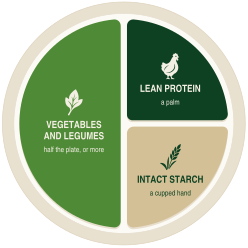
Every plate, in four portions
- Vegetables and legumeshalf the plate, or more
- Lean proteina palm
- Intact starcha cupped hand
- Fat, with intenta thumb, not a pour
And the three lines it draws
- Red meat is out.
- Whole eggs are out and the whites are in.
- Dairy is out, apart from fat-free plain Greek yogurt.
These are stricter rules than most books draw, and they are not moralism. They are the mechanism: they are what lets you eat enough protein to hold your muscle without importing the saturated fat that usually comes with it.
The complete list — twenty-one foods to build from, ten to leave at the store — is a single page of the book.
Why you can check this one
Every claim is cited — including the studies that argue against it.
No trial has tested LP3 itself. The closest anyone has come is the pescatarian group in the Adventist Health Study — plants plus fish — which had the lowest mortality of any diet group among 73,308 adults — narrowly, with the vegans close enough behind that the study cannot separate them.
Fourteen chapters, forty recipes
Five parts and the reference pages. The full contents, chapter by chapter, are on the book page.
- Part OnePlants first, protein on topWhy the plant base decides everything else, where the protein comes from, why seafood stays — and one set of real numbers.
- Part TwoThe methodThe plate, your protein number, fat loss without the math, and the least training that earns the food.
- Part ThreeThe kitchenThe standing list, the Sunday hour, and the four-week plan.
- Part FourThe recipesForty of them, every one leading with plants.
- Part FiveThe real worldEating out, travel, holidays, plateaus, and year two.
- ReferenceThe pages you photographThe food list, a blank week, the recipes by ingredient, and the Notes.
What the book actually looks like
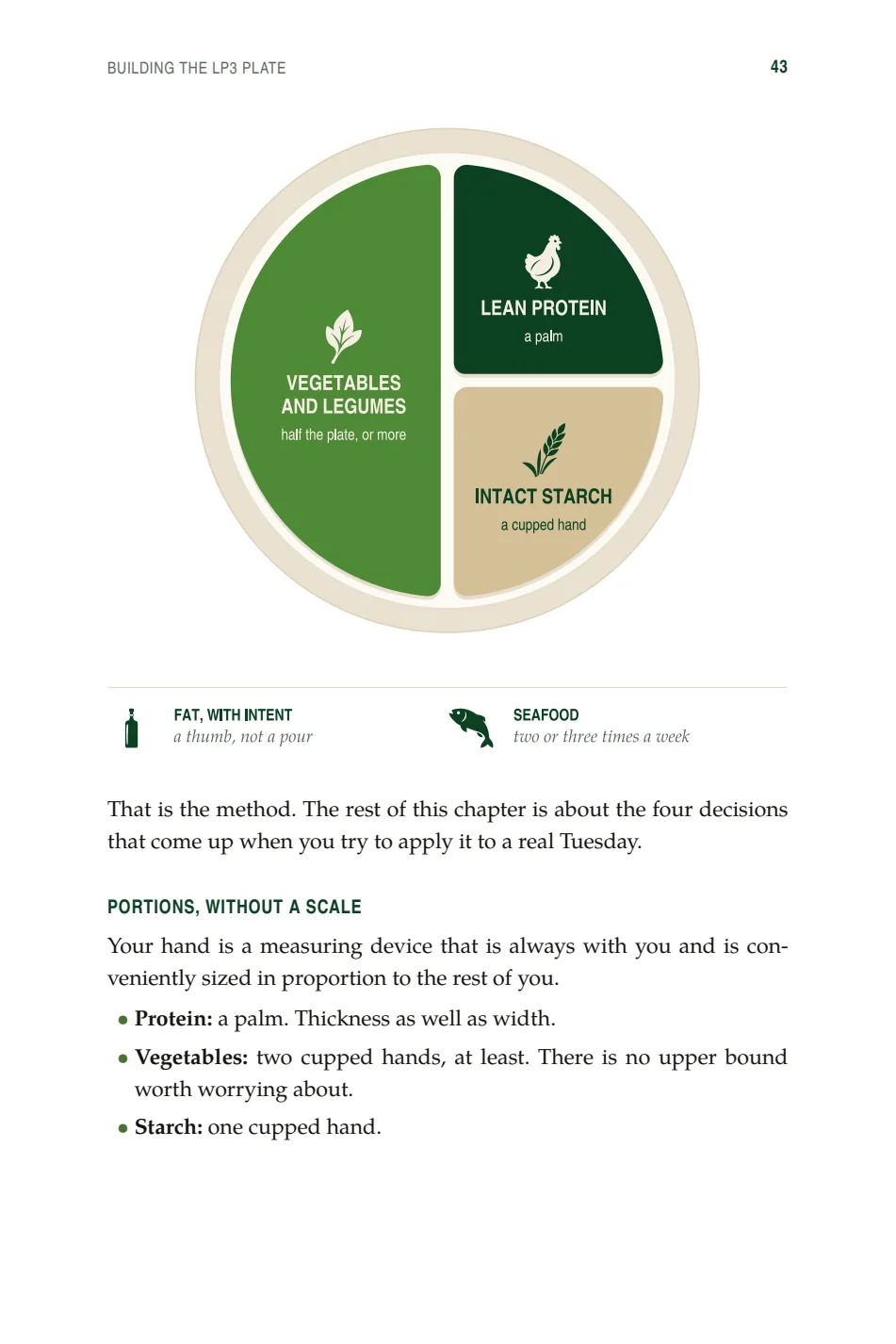
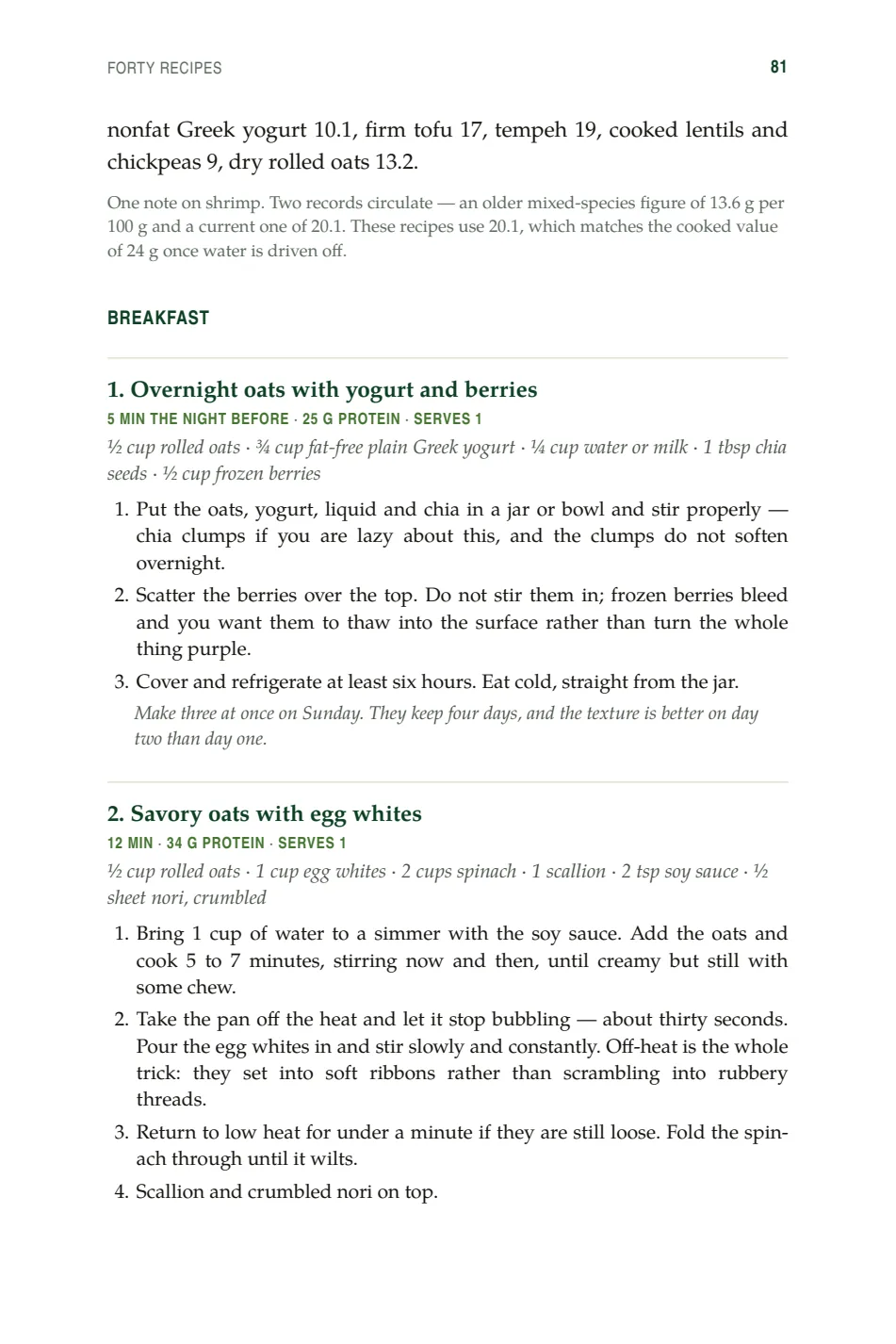
Two pages, exactly as they appear in the book — same typesetting, same recipes, same way of counting the protein.
The LP3 Diet
The whole method, worked out. Eat until you are full, keep the muscle you have, and stop deciding what is for dinner. 132 pages.
- The plate, in one picture — no counting, no logging, no app
- Your protein number, and why it goes up after sixty
- Four weeks of meals — three with the grocery lists already written, and a fourth you build yourself
- 40 recipes, each with the protein per serving calculated from USDA reference values
- Three lifting sessions a week, written out, so the protein has something to build
- Restaurants, airports, holidays, and what to do when it stalls
- The Notes: every claim cited, the weak ones said to be weak
- Thirty days to change your mind — refunded on request, no form
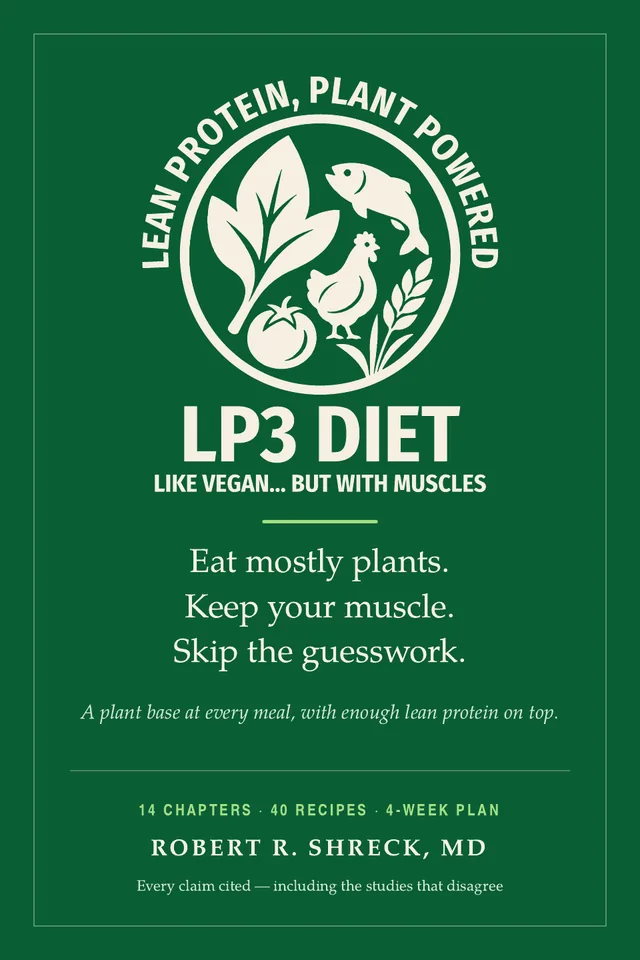
Written by Robert R. Shreck, MD, medical oncologist.
$39.99
PDF and ePub, instant download. Read on anything.
Buy the bookDownload link emailed within minutes — both files, yours to keep. Thirty days to ask for your money back, no reason needed and no form to fill in: reply to the receipt and it is refunded. The free six-page sample below is real pages from the book, so you can read the writing before you pay. Terms.
Not sure yet? Read six pages free first.
If $39.99 is more than you want to spend
Just the cooking half
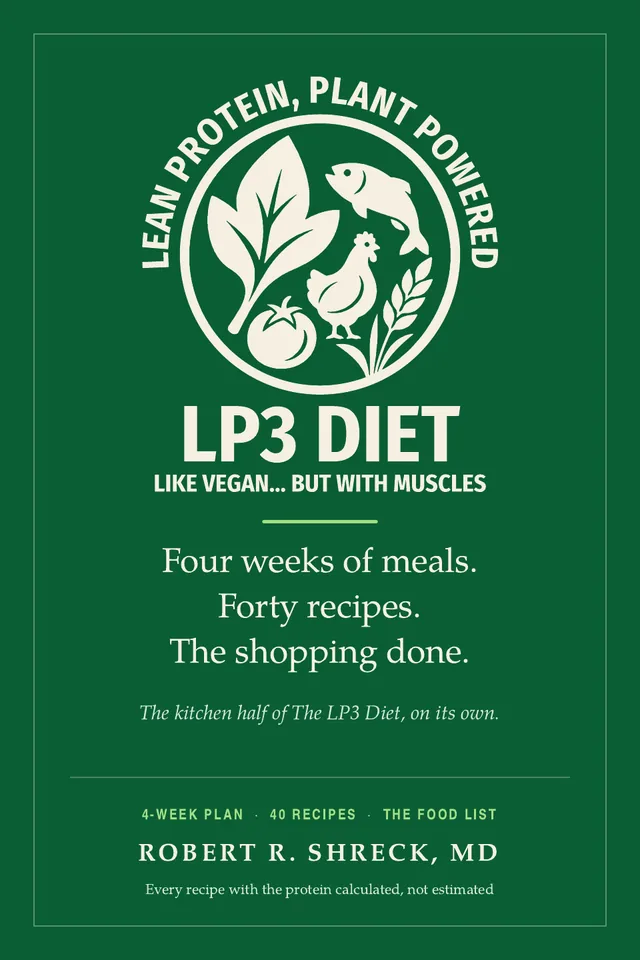
Part Three and Part Four of the book, complete and unabridged. The four weeks, the recipes and the shopping lists, without the chapters explaining why the plate is built the way it is. If what you want is to start cooking on Sunday, this is all of that part.
- Four weeks of meals — three with the grocery lists already written, and a fourth you build yourself
- All 40 recipes, each with the protein per serving calculated
- The LP3 kitchen: staples, the Sunday hour, budget, feeding a household
- The complete food list, and the blank weekly grid
- 40 pages, PDF and ePub
$19.99
PDF and ePub, instant download
Get the cooking halfIt is the same typesetting and the same recipes as the full book. If you buy this and want the whole thing later, write and I will take what you paid off the price.
Not ready to buy?
Six pages, free: the plate, the full contents, and one full day of meals with the recipes written out. No obligation, and you can read how the book is written before you buy it.
Rather not leave an address? Download it directly — no sign-up, nothing to unsubscribe from.
A plant base at every meal, with enough lean protein on top. Whole food, no counting, and nothing you are asked to take on faith.
- Rooted in nature.
- Answerable to science.
- Built to last.